The Power of Oratory in the Medieval Muslim World: Bibliography – Linda G Jones
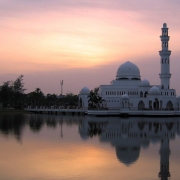
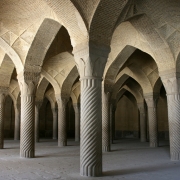
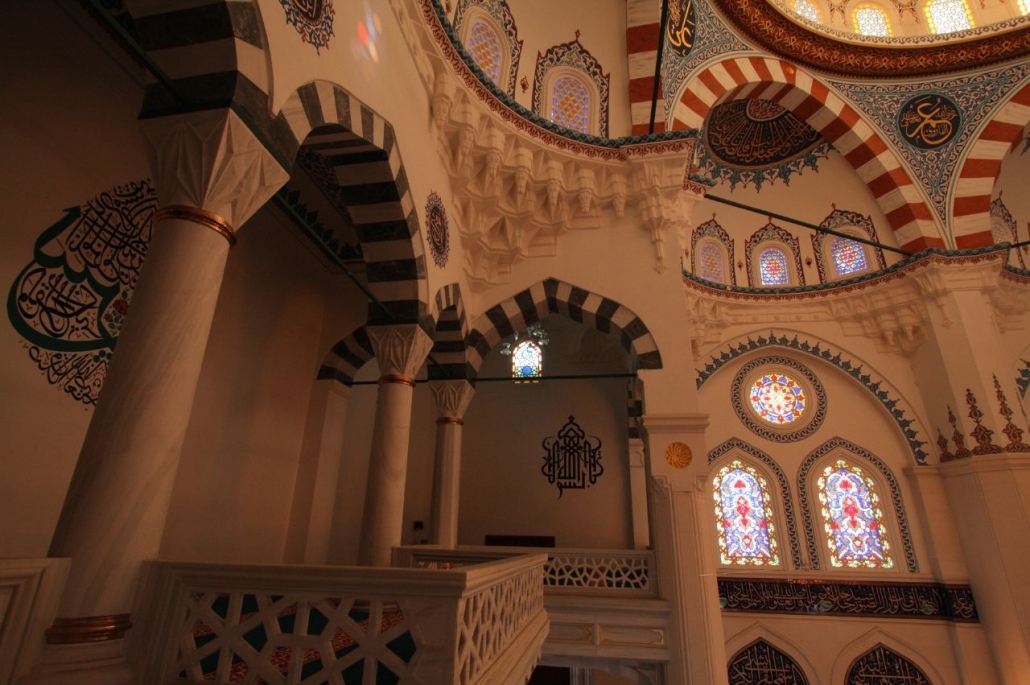
The mosque is the symbol of the living faith of Islam: its religiosity, faith in God and in His all-powerfulness. This sacred space is a reflection of deep belief in the divine word. It is also the place of the offering of prayer and of all the rites and rituals of Islam. To these symbolic elements must be added the components of the sacred space of the mosque: the minaret, the prayer hall with its mihrâb (prayer niche) and the minbar, or pulpit. These are the ritual supports of the sanctity of the mosque. Each of these elements has its own function in the sacred order. The prayer hall is the place of piety and of devotion. The minaret and the minbar represent elevation towards Heaven for the call to prayer or for ritual supplication and/or for the ritual “sermon” or the khutba. 1 The divine word is either “proclaimed aloud”, or it is silent prayer. To reach God Most High one must either rise, or else prostrate. The centre of centres can only be God, and the mosque is situated in the centre of space, the more elevated spaces being symbolically nearer to God. Thus, in Islamic tradition the Kaa’ba, the centre of the world, is, symbolically, the most elevated place on earth, symbolising the centre of Heaven. All mosques are considered equivalents or copies of the Kaa’ba. Centrality and elevation, therefore, are two major aspects of the sanctity of the space of the mosque. Mystical and spiritual communication takes place in a sacred “centre”. This communication is expressed through religious rites, rites of “ascension”, revealing the process of elevation towards Heaven, of the worship of God.
In the Muslim religion, various ritual symbols assist the believer on his/ her path to Paradise. The ritual prayer, or the “rising” towards the Kaa’ba, or the pilgrimage, are amongst the most well known forms. All of these rites express but one desire, to “rediscover” God, to regain the lost Paradise. The rites involve sacred words which translate the “nostalgia for Paradise” and the love of God. Simply stated, these words use the paths laid out by the religion for access to Heaven